.png?alt=media&token=bfcc71bf-04da-4200-badf-6c9f66c06a3c)
PM Surya Ghar Yojana 2026: Subsidy, Eligibility & How to Apply
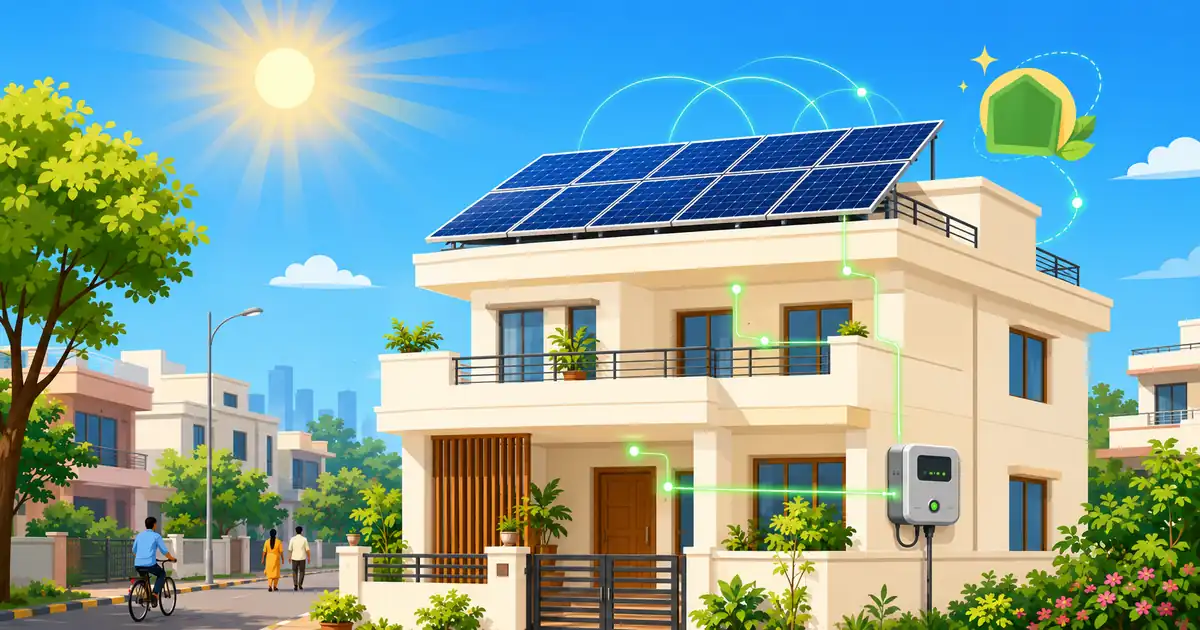
India's Power Crisis Just Hit a Record. Here's How to Get Free Electricity.
On May 21, 2026, India's peak electricity demand crossed 270.82 GW for the first time in history. ACs running flat-out, fans on full speed, and bills that look like a small EMI. The good news: the government is paying you to install rooftop solar — up to ₹78,000 in central subsidy, plus extra in many states.
This is the complete 2026 guide to PM Surya Ghar Muft Bijli Yojana — eligibility, subsidy slabs, state-wise benefits, application steps, costs, payback period, and the small-print most articles skip. If you're paying ₹3,000+ a month for electricity, this article will pay for itself in five minutes of reading.
What Is PM Surya Ghar Muft Bijli Yojana?
PM Surya Ghar: Muft Bijli Yojana (PMSG-MBY) is a Central Sector Scheme launched by the Ministry of New and Renewable Energy in February 2024. The official goal is to install rooftop solar in 1 crore (10 million) Indian households by FY 2026-27, supported by a total outlay of ₹75,021 crore.
The scheme is built on three pillars:
- Central Financial Assistance (CFA): Direct subsidy credited to the homeowner's bank account after installation
- Free electricity: Up to 300 units per month for households with adequately sized systems
- Net metering: Excess solar generation sold back to the grid for credits
PM Surya Ghar Yojana 2026: Latest Numbers
| Metric | Latest Data | Source |
|---|---|---|
| Households benefited | 32,02,697 (as of 16 March 2026) | Lok Sabha — Ministry of New & Renewable Energy |
| CFA disbursed | ₹17,967.53 crore (as of 19 March 2026) | PIB / MNRE |
| Total scheme outlay | ₹75,021 crore | MNRE / Cabinet approval |
| Target | 1 crore households by FY 2026-27 | PIB / MNRE |
| FY26 leading states | Maharashtra, Uttar Pradesh, Gujarat | The Hindu BusinessLine |
Rooftop solar adoption under the scheme has doubled in FY 2025-26 compared to the previous year, with three states — Maharashtra, UP, and Gujarat — leading installations.
How Much Subsidy You Actually Get (Central + State)
Central Subsidy Structure (PIB / MNRE)
The Central Financial Assistance is structured in slabs based on system size:
| System Size | Central Subsidy (Non-Hilly) | Central Subsidy (Hilly Areas) |
|---|---|---|
| Up to 1 kW | ₹30,000 | ₹33,000 |
| 2 kW | ₹60,000 | ₹66,000 |
| 3 kW or more (capped) | ₹78,000 | ₹85,800 |
| Group Housing Society / RWA (common facilities) | ₹18,000 per kW, up to 500 kW per project | |
Important: The central subsidy is capped at 3 kW for individual residential users. If you install a 5 kW or 10 kW system, you still receive a maximum of ₹78,000 from the centre — the rest is at market cost.
State Subsidies (Stack on Top of Central)
Several states offer additional subsidies stacked on top of the central CFA. A few examples:
| State | Additional Subsidy / Benefit | Source |
|---|---|---|
| Delhi | Up to ₹30,000 extra → total subsidy ~₹1.08 lakh for 3 kW+ | SolarSquare 2026 Delhi guide |
| Maharashtra | Implementation via MahaDiscom; ₹18,000/kW for additional capacity 2-3 kW; cap ₹78,000 | MahaDiscom I-SMART |
| Rajasthan | ₹1,185 crore disbursed to 1.5 lakh+ consumers (3rd in adoption) | BusinessWorld |
| Haryana | State Financial Assistance up to ₹25,000/kW or 40% billed (income ≤ ₹1.80 lakh, up to 2 kW) | DHBVN SFA portal |
| West Bengal | Rolled out the central scheme in May 2026 | Times of India |
Note: State policies are updated periodically. Always confirm current subsidy with your state DISCOM or the official portal before installation.
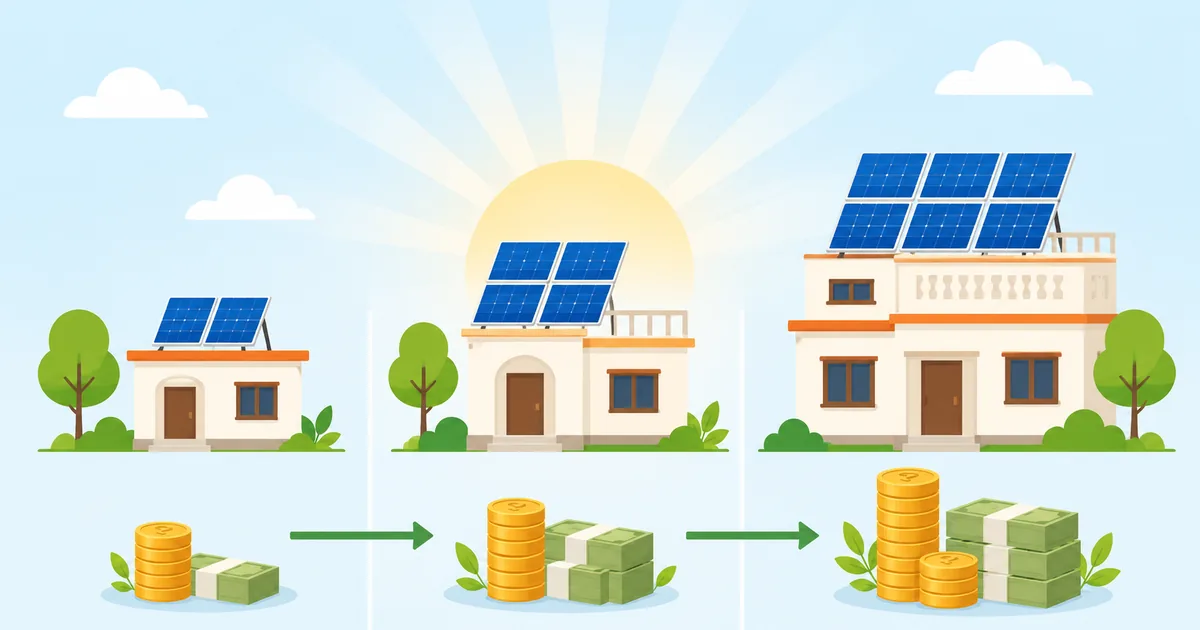
Who Is Eligible for PM Surya Ghar Yojana?
The eligibility criteria are intentionally broad to maximize adoption:
- Citizenship: Indian citizen
- Property ownership: Must own the residential property (or have authorisation from the owner)
- Rooftop: Must have a suitable rooftop area for solar installation (typically 100 sq ft per kW)
- Electricity connection: Valid residential electricity connection in your name
- Existing solar: Should not have already availed central subsidy for rooftop solar before
- Category: Residential category only (not commercial / industrial)
There's no central income cap for the standard subsidy. Some states layer income-based assistance for low-income households (Haryana, for example), but the central ₹78,000 is available to anyone in the residential category meeting the basic criteria.
Real Cost: How Much Will You Actually Pay?
Market installation cost ranges from ₹60,000 to ₹80,000 per kW depending on panel quality, inverter type, and city.
| System Size | Market Cost (Approx.) | Central Subsidy | Out-of-Pocket Cost |
|---|---|---|---|
| 1 kW | ₹60,000–80,000 | ₹30,000 | ₹30,000–50,000 |
| 2 kW | ₹1.2–1.6 lakh | ₹60,000 | ₹60,000–1.0 lakh |
| 3 kW | ₹1.8–2.4 lakh | ₹78,000 | ₹1.02–1.62 lakh |
| 5 kW | ₹3.0–4.0 lakh | ₹78,000 (capped) | ₹2.22–3.22 lakh |
If you live in a state offering additional subsidy (Delhi, Haryana, Rajasthan, etc.), your out-of-pocket cost drops further. Most public sector banks (SBI, Bank of India, Canara Bank) also offer dedicated rooftop solar loans at ~7-10% interest, allowing you to spread the cost over 5-10 years and have your monthly EMI lower than your current electricity bill from day one.
How to Apply for PM Surya Ghar Yojana — Step by Step
- Register on the portal: Visit pmsuryaghar.gov.in and create an account using your mobile number, electricity bill consumer number, and state DISCOM details.
- Apply for rooftop solar: Fill the rooftop solar application form, specifying your desired system size (typically 1-3 kW for households).
- Wait for DISCOM feasibility approval: The local DISCOM checks whether your connection can support the proposed system size. Approval typically takes 7-15 days.
- Choose an empanelled vendor: The portal lists pre-approved vendors in your area. Compare quotes — only empanelled vendors are eligible for subsidy disbursement, and they must provide a 5-year free annual maintenance contract.
- Get the system installed: The vendor handles installation, including mounting structures, panels, inverter, and DC/AC cabling. This usually takes 2-7 days.
- Apply for net metering: After installation, submit the installation details on the portal. The DISCOM inspects, approves, and installs a net meter. This step often takes 15-30 days.
- Subsidy credited to bank account: Once net metering is operational and inspection is complete, the central subsidy is credited directly to your registered bank account, typically within 30 days of final inspection.
Total timeline: 30 to 60 days from application to subsidy receipt, in most states.
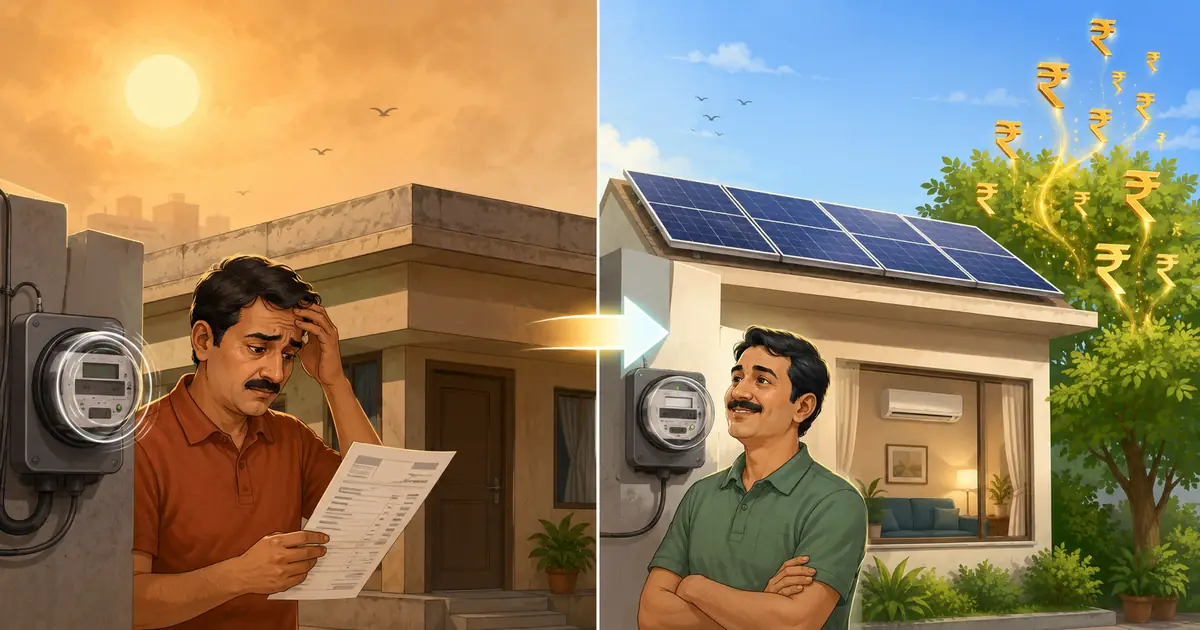
How Much Will You Save? Real Numbers
A 3 kW rooftop solar system in most Indian cities generates approximately 360-450 units per month (varies by location, orientation, and shading). The average urban Indian household with normal AC use consumes around 250-400 units per month.
| Metric | Estimate (3 kW system) |
|---|---|
| Monthly generation | 360–450 units |
| Annual generation | 4,320–5,400 units |
| 25-year lifetime generation | ~1.0–1.3 lakh units (with degradation) |
| Average savings (₹6/unit blended tariff) | ₹26,000–32,000 per year |
| 25-year cumulative savings | ₹7–10 lakh |
| Payback period (after subsidy) | 4–6 years |
| Free electricity period (after payback) | ~19–21 years |
Estimates based on average urban tariffs, typical solar irradiation, and the central subsidy of ₹78,000 only (state subsidies further reduce payback). Actual savings vary by location, tariff, and system performance. See solar ROI calculators for state-specific projections.
Carbon Footprint: How Much CO₂ You Save
India's electricity grid currently emits approximately 0.82 kg CO₂ per kWh generated. A 3 kW rooftop solar system generating ~5,000 units annually directly displaces grid electricity, preventing about 4 tonnes of CO₂ emissions per year.
- Annual CO₂ saved: ~4 tonnes (3 kW system)
- 25-year CO₂ saved: ~95-100 tonnes
- Equivalent to: ~180 mature trees absorbing CO₂ continuously for 25 years, or permanently removing ~2 petrol cars from the road
Use our Carbon Footprint Calculator to compare your current emissions before and after rooftop solar — most households see a 30-50% reduction in their total household carbon footprint after installing a 3 kW system.
Common Concerns Addressed
Will solar work during monsoon and cloudy days?
Yes. Modern solar panels generate 30-50% of their rated capacity even on overcast days. Annual generation accounts for variability — the 4,320-5,400 unit estimate already factors in monsoon and cloudy periods. Net metering means you draw from the grid when generation is low and feed back when it's high, balancing out across the year.
What about maintenance costs?
For the first 5 years, maintenance is free and mandatory from the empanelled vendor under the scheme rules — this is a built-in protection. After 5 years, basic cleaning (₹500-1,500 per visit, 2-4 times a year) is the main cost. Inverters typically last 10-15 years and may need replacement once during the 25-year life of the panels (₹15,000-30,000).
Do panels actually last 25 years?
Quality panels carry a 25-year performance warranty (typically 80-85% of rated capacity at year 25). The MNRE has approved standards for empanelled vendors to ensure compliant panels. Vendor selection matters — always verify ALMM (Approved List of Models and Manufacturers) compliance.
What if I sell my house?
The solar system stays with the property. The property's market value typically increases by an amount close to the system's remaining lifecycle value, since the next owner inherits decades of free electricity.
Why Now Is the Right Time
Three converging factors make 2026 the ideal year to install:
- Heatwave-driven bills: India just hit 270.82 GW peak power demand on May 21, 2026 — a new all-time record (Policy Circle). Electricity bills are climbing, and tariffs across many DISCOMs have been revised upward.
- Scheme deadline: The PM Surya Ghar scheme is targeted to solarise 1 crore households. Once the target is hit, subsidy availability could narrow. Several states already report waiting lists.
- Doubling adoption: Rooftop solar additions doubled in FY26. Vendors are scaling, costs are stabilising, and DISCOMs are streamlining net-metering approvals — the application process is faster now than it was even a year ago.
Track Your Solar Savings on HaritKosh
Before and after installation, knowing your numbers matters:
- Use our Carbon Footprint Calculator to baseline your current household emissions
- Register on HaritKosh to track monthly electricity, generation, and CO₂ savings
- Document your installation — solar adoption is one of the activity types eligible for future participation in voluntary carbon credit markets
- Read our complete guide to the Indian Carbon Market 2026 to understand how individual green actions can connect to verified credits
The Bottom Line
PM Surya Ghar Muft Bijli Yojana is one of the rare government schemes where the math is genuinely good for everyone:
- Up to ₹78,000 central subsidy, plus state subsidies in many regions
- 4-6 year payback, then ~20 years of nearly-free electricity
- ~4 tonnes CO₂/year reduction per 3 kW system
- 5-year free maintenance mandatory from empanelled vendors
- Property value typically increases by the remaining lifecycle savings
The scheme has already delivered for 32+ lakh households. The next slot is yours — if you decide to take it.
Sources
- PIB / MNRE — PM Surya Ghar Yojana implementation status (March 2026)
- Down to Earth — Lok Sabha statement on 32 lakh households (March 2026)
- The Hindu BusinessLine — FY26 state-wise solar adoption
- MahaDiscom I-SMART — Maharashtra rooftop solar portal
- DHBVN — Haryana State Financial Assistance for solar
- Official PM Surya Ghar portal — pmsuryaghar.gov.in
- Policy Circle — India peak power demand 270.82 GW (May 21, 2026)
Disclaimer: Subsidy slabs, state policies, and tariff rates are subject to change. Installation cost, payback period, and savings estimates are approximate and vary by location, vendor, system quality, and electricity tariffs. Always confirm current details with the official PM Surya Ghar portal and your state DISCOM before making financial decisions.
Keep reading: Water Crisis India 2026: Save Water, Cut Carbon | EV Carbon Savings & Subsidies India 2026 | Indian Carbon Market 2026 Guide
Frequently Asked Questions
Related Articles

Carbon Credits for Beginners: India's Green Economy Explained
Learn what carbon credits are and how they drive India's green economy in 2026. Beginner-friendly...
Green Hydrogen India 2026: Projects, Cost & Carbon Impact
India's green hydrogen landscape in 2026: major projects, production costs, carbon reduction...
How to Plant a Tree in India: Carbon Offset Guide (2026)
Learn how to plant a tree correctly in India: best season, species selection, step-by-step guide,...